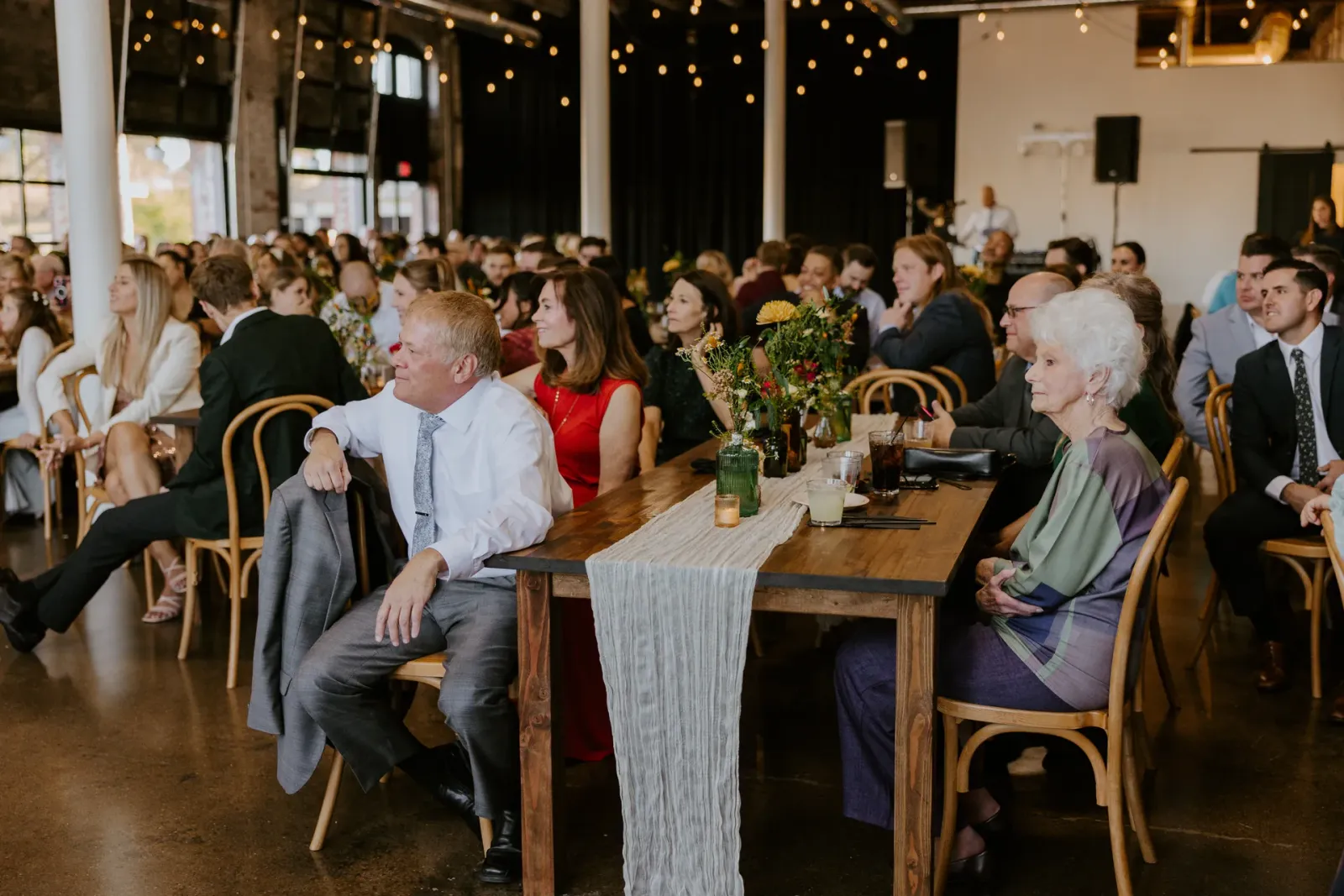
Photo: Clay House Photography

A reception-only wedding is a party that celebrates a marriage that already happened, with dinner, toasts, dancing, and a bar but no ceremony. In Indianapolis, couples who married at the courthouse, eloped, or had a destination wedding host one at home for everyone who missed it. Here’s how to plan it, word it, and where 24 Shelby fits.
I’m Sarah Conrad, a managing partner at 24 Shelby. Honestly, reception-only weddings are some of my favorite events in the building. The hard, emotional, everybody-is-nervous part is already done. People walk in ready to celebrate.
Can You Have a Reception-Only Wedding?
Yes, you can have a reception-only wedding, and it is completely normal. Couples marry privately, at a courthouse, during an elopement, or at a destination wedding, then throw a reception later for everyone else. Good etiquette only asks that the invitation be clear that guests are invited to a celebration, not a ceremony.
It goes by a few names: a reception-only wedding, a sequel wedding, a post-elopement party, or a belated reception. They all mean the same thing. The Emily Post Institute even has a guest list rule for it: a belated reception invites anyone who missed the wedding (Emily Post Institute, 2026).
The format is growing for practical reasons. About 32% of couples describe their wedding as a destination wedding (Zola, 2025). Meanwhile, 58% of young guests who have been to or are planning to attend a destination wedding feel it is an unfair financial ask, and 42% say they lost a friend because they couldn’t afford to go (Credit Karma, 2026). A reception back home fixes that. The people who couldn’t fly to Mexico still get to hug you.
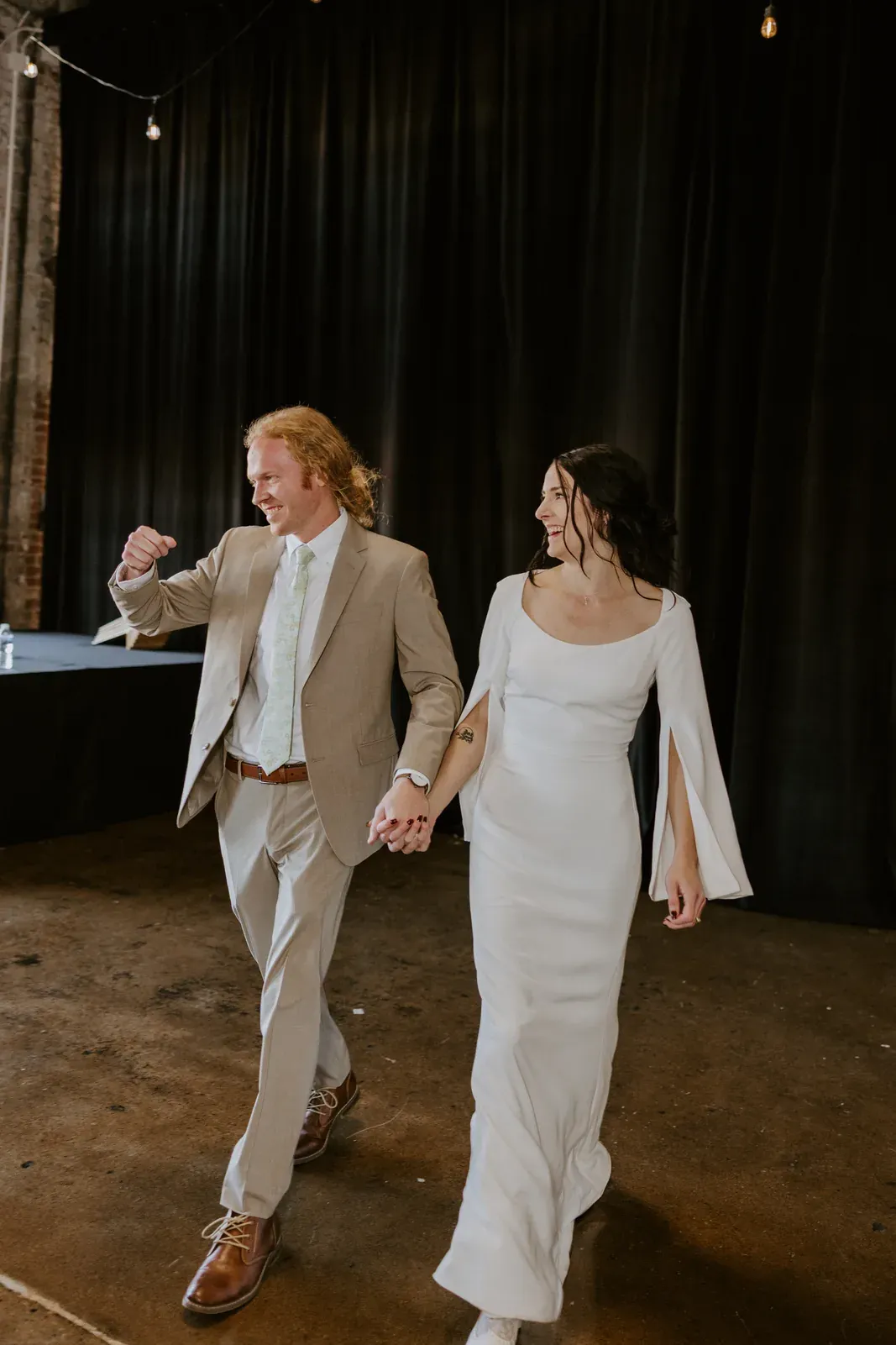 Photo: Clay House Photography
Why Do Couples Choose a Reception-Only Wedding?
Couples choose a reception-only wedding because they want the vows to be small and the party to be big. The most common reasons are a destination or elopement ceremony, a courthouse wedding done for timing or paperwork, a private religious or family ceremony, or simply wanting to skip the ceremony logistics entirely.
The reasons I hear most from couples in Indianapolis:
- They had a destination wedding. The ceremony happened on a beach or in another country with 20 people, and the other 100 want to celebrate too.
- They eloped. Just the two of them, maybe a photographer, then a party once they got home.
- They married at the courthouse first. For insurance, a move, military orders, or just because they didn’t want to wait. Our upcoming guide to courthouse weddings in Indianapolis covers that path.
- The ceremony was private on purpose. A small religious ceremony, a family-only ceremony, or a second marriage where the couple wanted the vows to stay quiet.
- They want to skip ceremony logistics. No rehearsal, no aisle, no officiant, no room flip. Just the fun part.
We’ve hosted exactly this. A dad threw an after-party for his son and new daughter-in-law after their destination wedding. He later wrote that “the service, setup, and space is exceptional,” and he called our bartender out by name. That’s the whole point of a reception-only wedding: the people who couldn’t be at the ceremony still get a great night.
Who Do You Invite to a Reception-Only Wedding?
Invite everyone you would have invited to a traditional wedding, including anyone who missed the ceremony. If some guests attended the ceremony and others did not, invite both groups to the reception and treat them the same. The reception is the main event, not a consolation prize.
Two etiquette points worth getting right:
- Don’t make it feel tiered. If 15 people were at the courthouse and 120 are at the reception, don’t talk about the ceremony like an exclusive club. Share photos and a short video so everyone feels included.
- Size it like a wedding. Guest count drives everything. The national average wedding has 117 guests (The Knot, 2026), but reception-only lists vary widely, from 40 close friends to the full extended family.
Do you need a wedding party? Not for a reception-only wedding. Some couples still ask close friends to give toasts, wear a matching color, or sit at a head table, and that works well. Others skip it entirely and sit with their friends. There is no aisle to walk, so a wedding party is a choice, not a requirement.
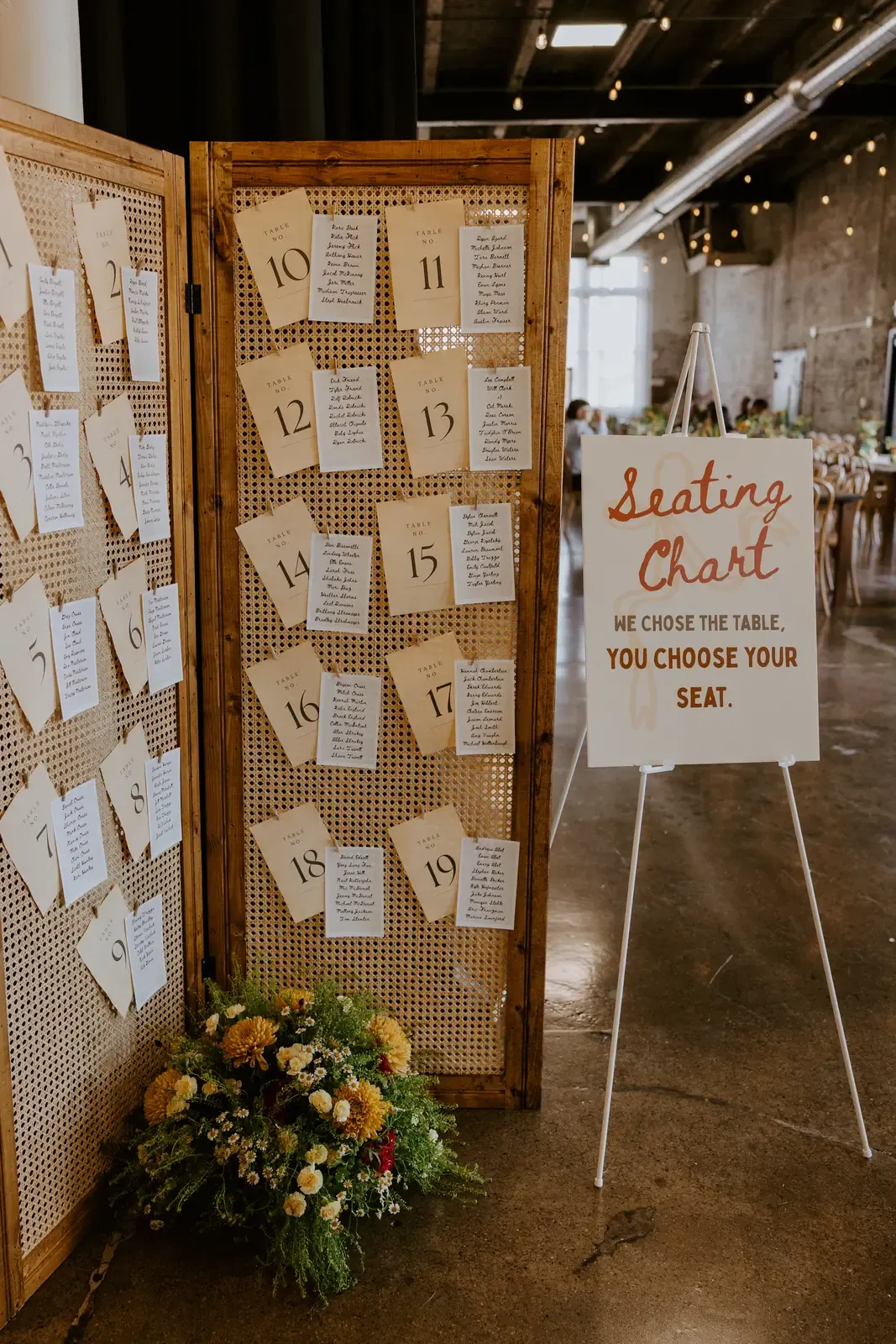 Photo: Clay House Photography
How Do You Word a Reception-Only Wedding Invitation?
Word a reception-only invitation by saying plainly that the couple is already married and that guests are invited to a reception in their honor. Include the date of the marriage if you like, plus the reception date, time, venue, and RSVP. Leave out any phrase that suggests a ceremony.
The Emily Post Institute notes that reply cards and RSVPs belong on reception invitations, not ceremony-only ones (Emily Post Institute, 2026), so a reception-only invite always gets an RSVP. A few wording options, from formal to casual:
| Tone | Sample wording |
|---|---|
| Formal | Mr. and Mrs. Taylor request the pleasure of your company at a reception in honor of Alex and Jordan, who were married on the sixth of June |
| Classic | Please join us for a reception celebrating the marriage of Alex and Jordan |
| Elopement | We eloped! Now let’s party. Join Alex and Jordan for dinner, drinks, and dancing |
| Destination | We said I do in Tulum. Now we’d love to celebrate with you at home |
| Casual | We got married. Come eat, drink, and dance with us |
Put the same message on your wedding website and repeat it on the RSVP page. Most guest confusion comes from a save-the-date that said “wedding” and an invite that said “reception.” Pick one word and use it everywhere.
How Is a Reception-Only Timeline Different?
A reception-only timeline is shorter and simpler than a traditional wedding day. There is no ceremony block, no photo gap between ceremony and cocktail hour, and no room flip, so the party starts as soon as guests arrive. Many reception-only weddings also start later, at 6 or 7 PM, and run four to five hours.
Here’s what changes:
- No ceremony, so no flip. At a lot of venues, including ours, holding a ceremony and reception in one room means flipping the layout in between. A reception-only wedding sets the room once.
- No cocktail hour gap. In a normal wedding, cocktail hour covers the couple’s photos. Here you can take photos before guests arrive, or skip formal photos entirely.
- A grand entrance does the ceremony’s job. It’s the moment everyone watches together. Make it count.
- Show the vows. Play a short ceremony video or a photo slideshow during dinner. Guests who missed it love this.
- Keep the traditions you want. Toasts, a first dance, cake, a bouquet toss. All optional, all fair game.
For the full reception structure, including how many hours to book and how to time toasts and dancing, our wedding reception planning guide has a sample timeline. I won’t repeat it here.
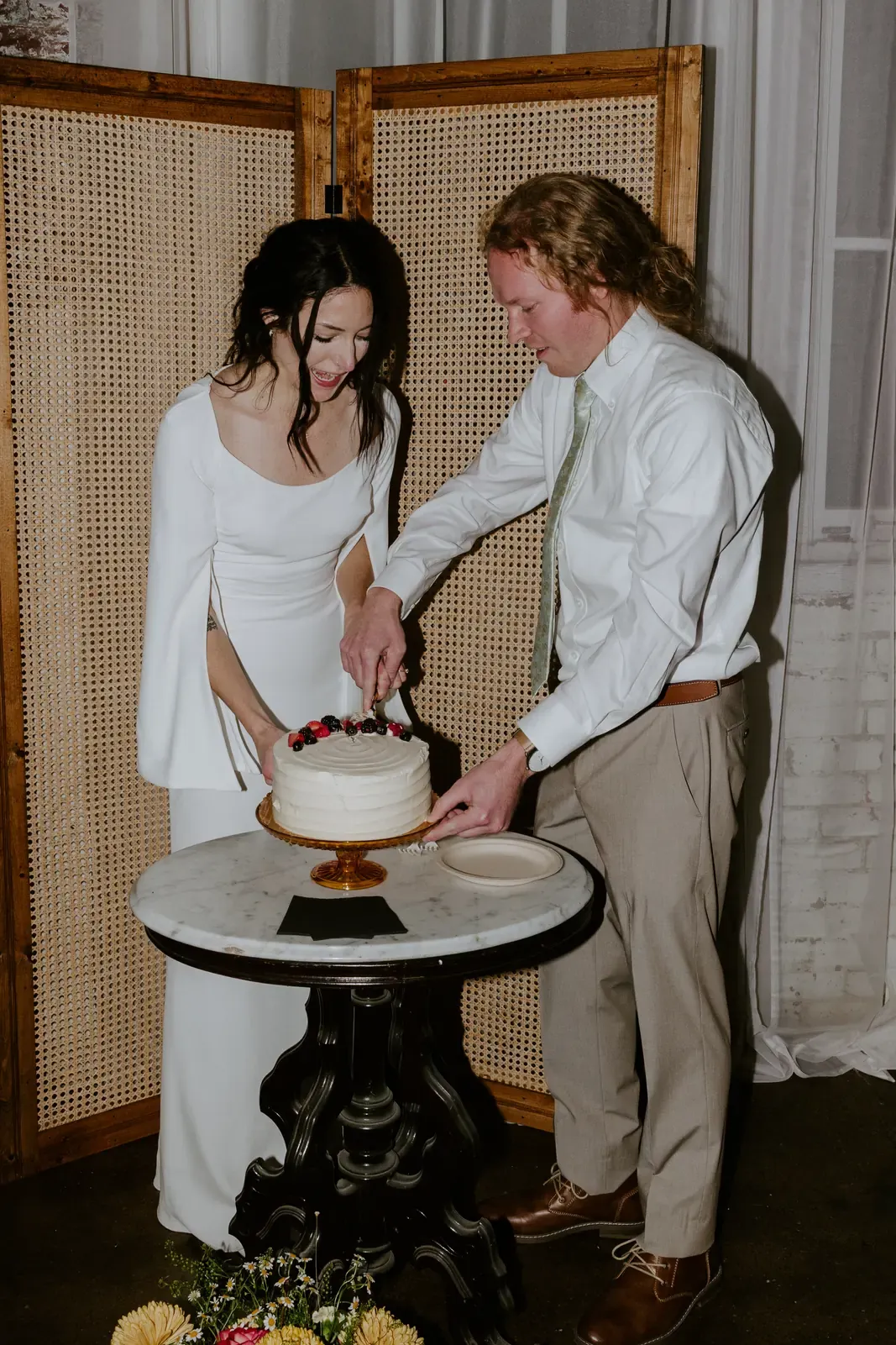 Photo: Clay House Photography
How Do You Keep Ceremony Traditions Without a Ceremony?
You keep ceremony traditions at a reception-only wedding by moving the ones you love into the party. The processional becomes your grand entrance, the vows become a short replay or a toast, and a family tradition, like a ring warming or a unity ritual, can happen right after the entrance while everyone is watching.
The traditions that move over easily:
- The processional. Walk in to the song you would have walked down the aisle to. Same goosebumps, no aisle required.
- The father-daughter or mother-son dance. These were always reception traditions anyway. Keep them.
- The ring moment. Show off the rings during the welcome toast, or pass them around the room in a small box for a ring warming, where each guest holds them for a second and makes a quiet wish.
- A blessing or a reading. If faith or family matters to you, ask a grandparent or a pastor to say a short blessing before dinner. It gives the night a moment of weight without a full ceremony.
- The kiss. Honestly, your guests will ask for it. Give them one after the entrance.
What I’d skip: anything that recreates the ceremony so fully that guests feel they are watching a second wedding. A reception-only wedding works because it is honest about what it is, a party for a marriage that already happened.
Elopement Reception Ideas That Work
The best elopement reception ideas bring the ceremony into the room for the people who missed it, then let the party take over. Show the vows, decorate with something from the trip or the courthouse, and put your money into food, drinks, and music rather than ceremony decor you no longer need.
According to Sarah Conrad, Managing Partner at 24 Shelby, “Guests don’t care about 90% of the details people stress over. At a reception-only wedding that’s even more true. They want to see you, eat well, get a drink without a long wait, and dance. Spend there.”
Ideas couples have liked:
- A vow replay. Read your vows again, or play the video, right after the entrance.
- The ceremony on display. Your marriage license, courthouse photos, or a few printed shots from the trip on a welcome table.
- A menu from the place you married. Tacos after a Mexico elopement, pasta after Italy.
- A signature cocktail with a story. We’re in a pre-Prohibition brewery building, so a 1920s classic always fits here.
- A real dance floor. It’s the part of the night most guests remember.
- An anniversary date. Hosting on your first anniversary gives the party a built-in reason and makes a great toast.
 Photo: Clay House Photography
What Kind of Venue Works for a Reception-Only Wedding in Indianapolis?
A reception-only wedding needs a venue built for dinner, a bar, and dancing, not a ceremony site. In Indianapolis that usually means an event venue, a restaurant private room, or a hotel ballroom. Match the room to your guest count, and favor venues that let you bring your own caterer if food is a priority.
| Venue type | Typical size | Strengths | Watch out for |
|---|---|---|---|
| Event venue | 50 to 300 | Full building, dance floor, bar, your choice of decor | Some require their own caterer |
| Restaurant private room | 10 to 150 | Food and service handled | Hard end times, little room to dance |
| Hotel ballroom | 100 and up | Guests sleep upstairs | Feels formal, usually in-house catering only |
| Brewery or taproom room | 40 to 90 | Relaxed, beer-forward | Usually no dance floor |
Downtown Indianapolis has good options in each category. Harry & Izzy’s has four private dining rooms for groups of 10 to 150 (Harry & Izzy’s, 2026), which suits a dinner-first reception. Cinderwood is an 11,000-square-foot downtown venue for up to 300 guests with a full-service bar (Cinderwood, 2026). And Tinker House, a 1915 building on the Monon Trail, hosts events for up to 200 guests (Tinker House, 2026). If your list is under 50, our guide to small wedding venues in Indianapolis and our look at micro weddings cover the smaller rooms.
How Does 24 Shelby Host a Reception-Only Wedding?
24 Shelby hosts reception-only weddings in two sizes: the Edison Room for larger guest lists, up to 200 seated with a dance floor, and the Libations Lounge for up to 75 guests in a more intimate bar-and-lounge setting. Outside licensed caterers are welcome, and our in-house bar team handles every drink.
The building is an 1898 bottling house, the only surviving pre-Prohibition brewery building in Indianapolis, just off I-65 and Washington Street. For a reception-only wedding that matters, because the room already looks like a party. Brick, wood beams, oversized windows, and Edison string lights are there before you add a single centerpiece. Custom draping can divide the Edison Room so a smaller group doesn’t rattle around in it.
What works in your favor here:
- The room is set once. No ceremony means no room flip, so the layout goes up before load-in and stays.
- Bring your own caterer. Any licensed caterer or restaurant, with a food prep kitchen to work from. Our vendors page lists the ones who know the space.
- The bar is handled. Our bartenders run it, and no outside alcohol comes in. If you’re comparing packages, the open bar guide explains the options.
- Screens for the vows. Three projector screens drop from the ceiling and take HDMI or Chromecast, so your elopement video plays without renting anything.
- Flexible days. Outside of Saturdays, which are full-day only, shorter hourly bookings are possible for smaller receptions.
The honest limit: we don’t do ceremonies on the Prohibition Patio, so if you change your mind and want a small vow renewal at the party, it happens inside in the Edison Room. And the bar is not optional. If you were hoping to bring your own wine from the trip, we can’t allow it.
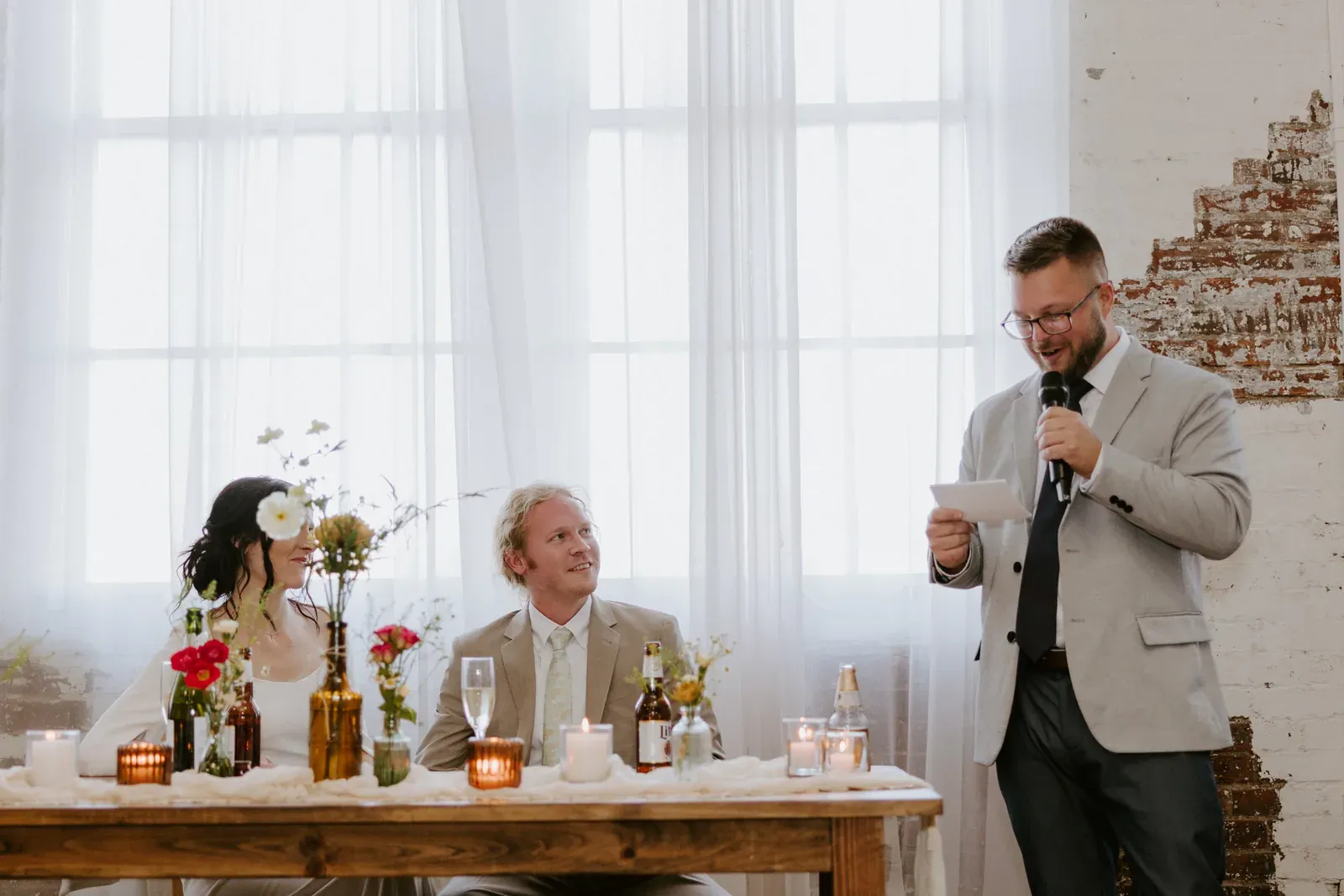 Photo: Clay House Photography
Is a Reception-Only Wedding Cheaper?
A reception-only wedding is usually simpler, and often less expensive, because you skip ceremony costs like an officiant, ceremony decor, a rehearsal, and a room flip. But the reception is where most wedding money goes anyway, so guest count, food, and bar still drive the total. Plan for a real party, not a discount wedding.
Venue and rentals take about 29% of the average wedding budget, with catering close behind at 24% (The Knot, 2026). Those line items don’t disappear without a ceremony. What does go away is everything around the ceremony, plus the stress of the vows themselves. For more on what moves a venue total, see our guide to the hidden costs of wedding venues.
If you’re planning a party after a courthouse ceremony or a trip, take a look at our weddings page or the full complete guide to Indianapolis wedding venues, and reach out when you have a date in mind. Reception-only couples tend to book on shorter timelines, and I’m happy to tell you what’s open.
Frequently Asked Questions
Can you have a reception-only wedding?
Yes. A reception-only wedding is a celebration of a marriage that already happened, usually after a courthouse ceremony, an elopement, a destination wedding, or a private family ceremony. It has all the parts guests remember, like dinner, toasts, a first dance, and a bar, without the ceremony. It is a normal, accepted format, not a lesser wedding.
How do you word a wedding invitation for a reception only?
Say plainly that the couple is already married and that guests are invited to a reception in their honor. A simple version: Please join us for a reception celebrating the marriage of Alex and Jordan, who were married on June 6. Include the date, time, venue, and an RSVP. Avoid any language that suggests a ceremony is part of the event.
Is a reception-only wedding rude to guests?
No. It is only awkward when guests think they are invited to a ceremony and are not. Be clear on the invitation and the wedding website, and most guests are simply happy to celebrate. If some guests attended the ceremony and others did not, avoid making the reception feel like a second tier. Treat every guest as the main event.
Do you bring a gift to a reception-only wedding?
Yes, guests typically bring or send a gift, the same as they would for a traditional wedding. A reception-only celebration is still a wedding celebration. Couples can share a registry on their wedding website. Some couples who eloped say no gifts are needed, which is gracious but rarely stops guests from giving.
How long is a reception-only wedding?
Most reception-only weddings run four to five hours. Without a ceremony, there is no gap for photos or a room flip, so the party starts as soon as guests arrive. A good shape is a cocktail hour, an entrance, dinner and toasts, then dancing and the bar until the end. Shorter events of three hours work for smaller groups.
Do you need a first dance at a reception-only wedding?
You do not need one, but most couples keep it. A reception-only wedding can include every reception tradition, from a grand entrance to toasts, a first dance, cake cutting, and a send-off. Some couples also play ceremony video or photos on screens so guests who missed the vows can see them. Keep what you like and skip what you do not.
How soon after eloping should you have a reception?
Anywhere from a few weeks to a year after the ceremony is common. Sooner keeps the excitement fresh. Later gives guests time to plan travel and gives you time to book a venue on a date you like. A milestone date, like your first anniversary, makes a natural reason to gather everyone.
Related Reading
Planning
How to Choose a Wedding Venue in Indianapolis
How to choose a wedding venue in Indianapolis: the six filters to run in order, from guest count to catering rules, plus a pre-tour checklist.

Planning
Wedding Welcome Party Venues in Indianapolis
What a wedding welcome party is, who to invite, how it differs from a rehearsal dinner, what to serve, and 7 Indianapolis venues for 40 to 80 guests.
Planning
Open Bar or Cash Bar? Wedding Bar Packages Explained
An open bar wedding means the couple covers every drink. How open, limited, consumption, ticket, and cash bars work, plus how to read a venue bar package.