Photo: Clay House Photography

How to choose a wedding venue in Indianapolis comes down to running six filters in order: guest count, location, catering and bar rules, date, style, and what the rental includes. Do it in that order and most of the city’s venues rule themselves out before you tour anything. I’ll use 24 Shelby as the worked example at every step.
I’m Sarah Conrad, a managing partner at 24 Shelby, the 1898 bottling house just off I-65 and Washington Street. I bartended for more than 15 years before I helped open this building, and I’ve watched a lot of couples fall for a room they couldn’t actually use. This guide is the order I wish every couple walked in with.
It is not a list of venues. For that, our complete guide to Indianapolis wedding venues sorts the city by style. It is also not a list of tour questions, because our wedding venue tour questions already cover that. This is the step before both: how to decide which venues deserve your Saturday.
How Do I Know What Wedding Venue I Want?
You know what wedding venue you want once you have a guest count, a location, and your catering and bar rules settled. Those three answers cut most Indianapolis venues off your list. Style matters, but it comes later, because a room you love that cannot seat your guests or allow your caterer is not really an option.
Most couples do it backward. They scroll photos, fall for a look, book a tour, and only then find out the room seats 120 and their list is at 180. Or the venue requires its own caterer and they already promised Grandpa’s favorite barbecue place.
Here is the full order, and why each filter sits where it does.
| Order | Filter | The question to answer | What it rules out | 24 Shelby’s answer |
|---|---|---|---|---|
| 1 | Guest count | Can it seat everyone with room to dance? | Rooms too small or too big | Up to 200 seated for a wedding, 300 standing |
| 2 | Location | Can guests get there, park, and get back to a hotel? | Venues far from your guests’ hotels | Downtown, off I-65 and Washington St, free parking |
| 3 | Catering and bar | Who cooks, and who pours? | Venues that lock you into vendors you don’t want | Outside licensed caterers welcome, in-house bar required |
| 4 | Date | Is your date open, and how flexible are you? | Venues booked on your weekend | Peak May to October, off-peak November to April |
| 5 | Style | Will you need to redecorate it? | Blank rooms you can’t afford to dress | 1898 brick, wood beams, Edison lights already there |
| 6 | Inclusions | What does the rental actually come with? | Venues where the real total is far above the quote | Furniture, initial layout, 16 hours, bridal suite |
Filter 1: Does the Wedding Venue Fit Your Guest Count?
The first filter is guest count, because capacity is the one thing no venue can fake. Compare your number to each venue’s seated wedding capacity, not its standing or cocktail number. A full wedding with dinner, a bar, and a dance floor needs far more room per guest than a standing party does.
Get a working number before you look at a single venue. The national average is 117 guests (The Knot Real Weddings Study) (The Knot, 2026), but Indianapolis runs bigger. The average wedding in the Indianapolis metro had 150 to 160 guests (The Wedding Report, 2025). If your family is big and Midwestern, plan for that range, not the national one.
Then do the square-footage math yourself. Dining alone takes 12 to 15 square feet per guest, but once you add a dance floor, bar, and DJ, a full wedding needs 25 to 35 square feet per guest (Fetewell, 2026). If a venue quotes 200 guests in a 4,000-square-foot room, ask them to show you where the dance floor goes.
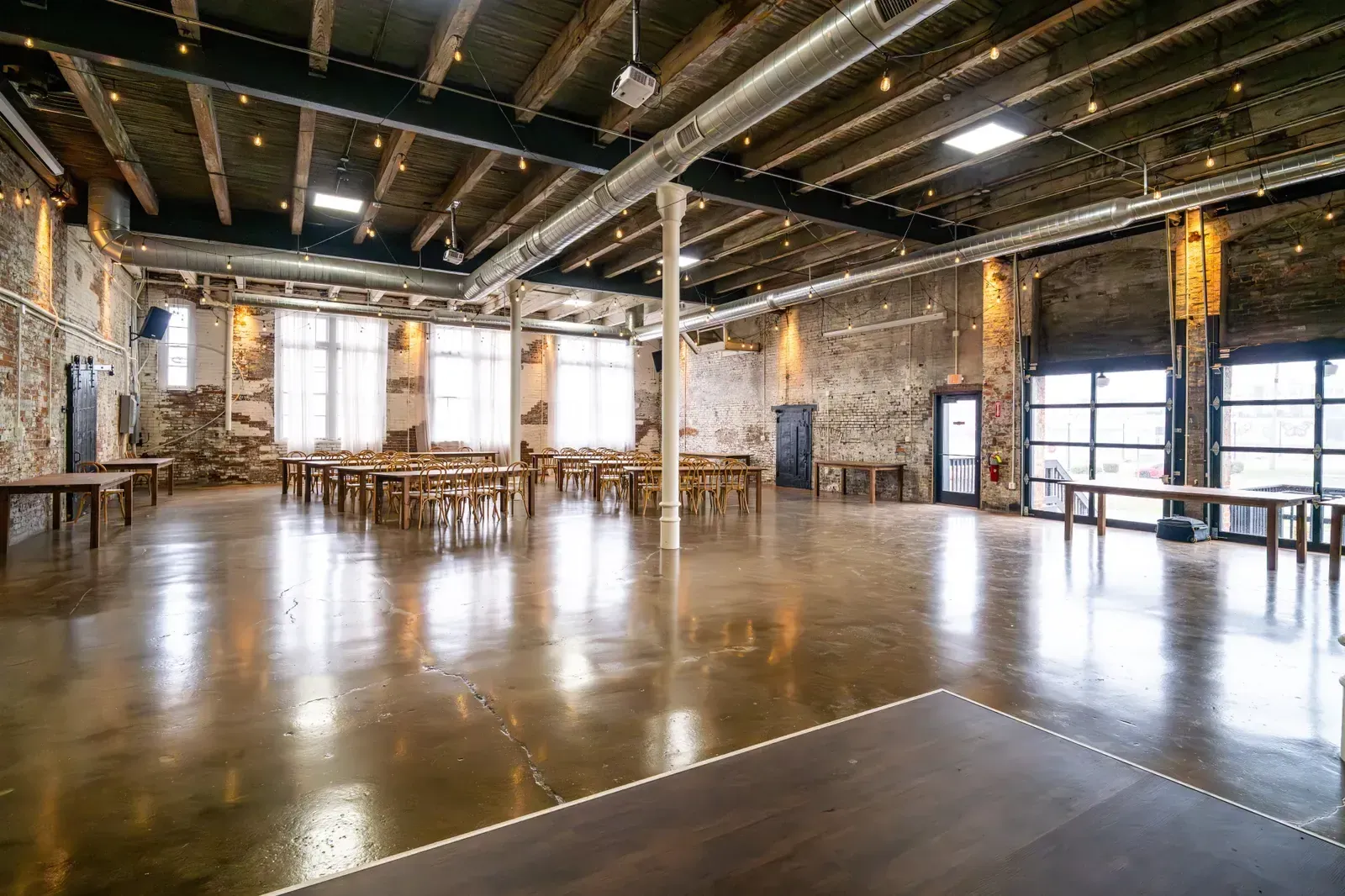 Photo: Clay House Photography
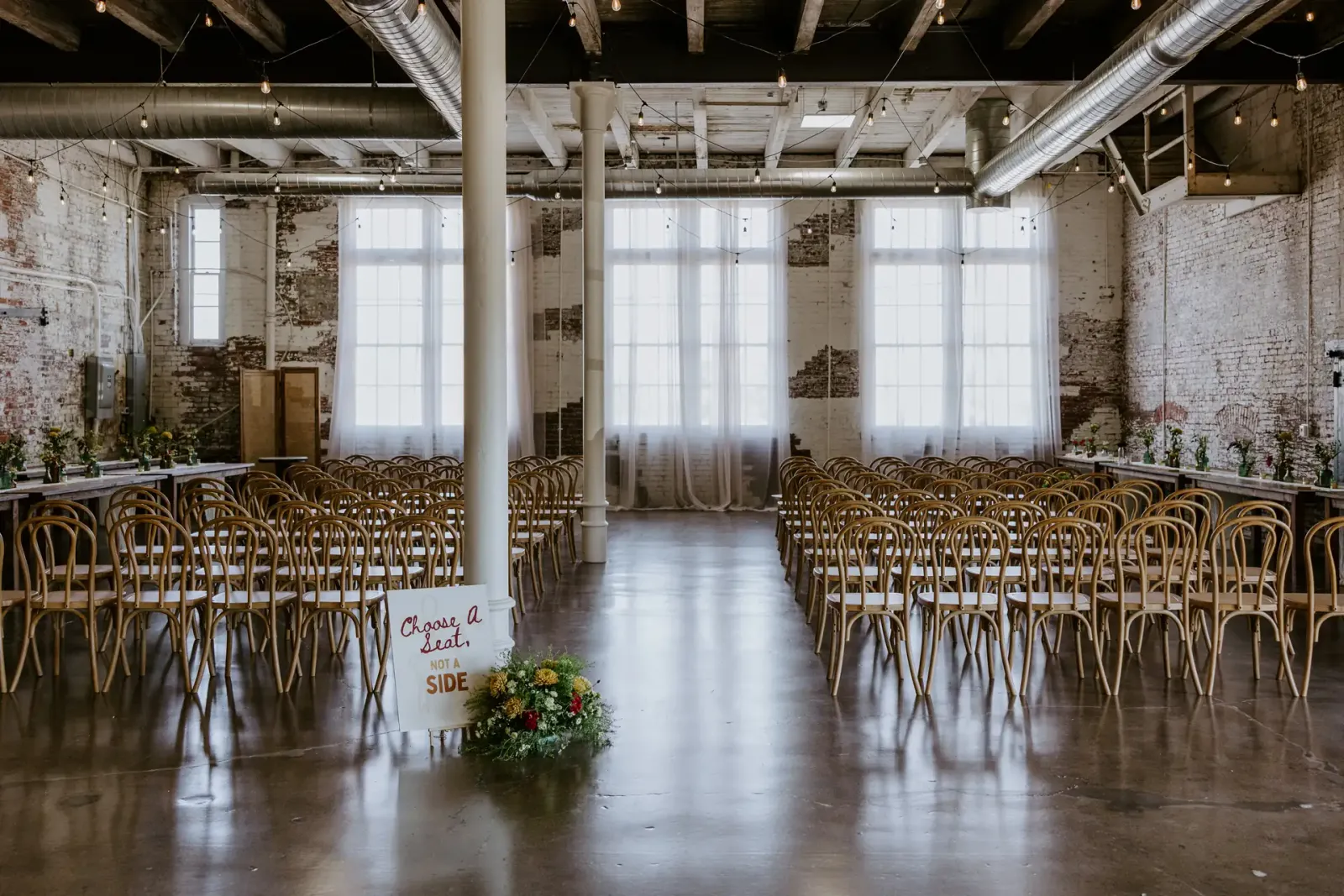
Here’s how that works at 24 Shelby. The Edison Room is 3,296 square feet and the Libations Lounge is another 1,716, all on one floor. We seat up to 200 for a wedding, which leaves room for a real dance floor, and up to 300 for a standing cocktail-style party. If you are pushing past 200 seated, we are not your venue, and our guide to Indianapolis wedding venues for 200 to 250 guests walks through the larger rooms.
 Photo: Clay House Photography
Filter 2: Downtown or the Suburbs?
Location is the second filter because it decides how your guests travel, where they sleep, and whether they get home safely. Downtown Indianapolis venues put guests near hotels, restaurants, and rideshare. Suburban and rural venues trade that for space, gardens, and quiet, but often need shuttles and longer drives.
Ask three practical questions about every address. Where will out-of-town guests stay, and how far is that from the venue? Where does everyone park, and does it cost them? And how does a guest who had three drinks get back to the hotel?
24 Shelby sits just off I-65 and Washington Street, 13 miles from Indianapolis International Airport. Parking is complimentary: 20 spaces right out front, street parking on both sides of Shelby Street and on Daily Street, and the full lot behind the building on weekday evenings after 5 PM and all day Saturday and Sunday. If most of your guests are flying in, our downtown Indianapolis wedding weekend guide covers hotels and room blocks.
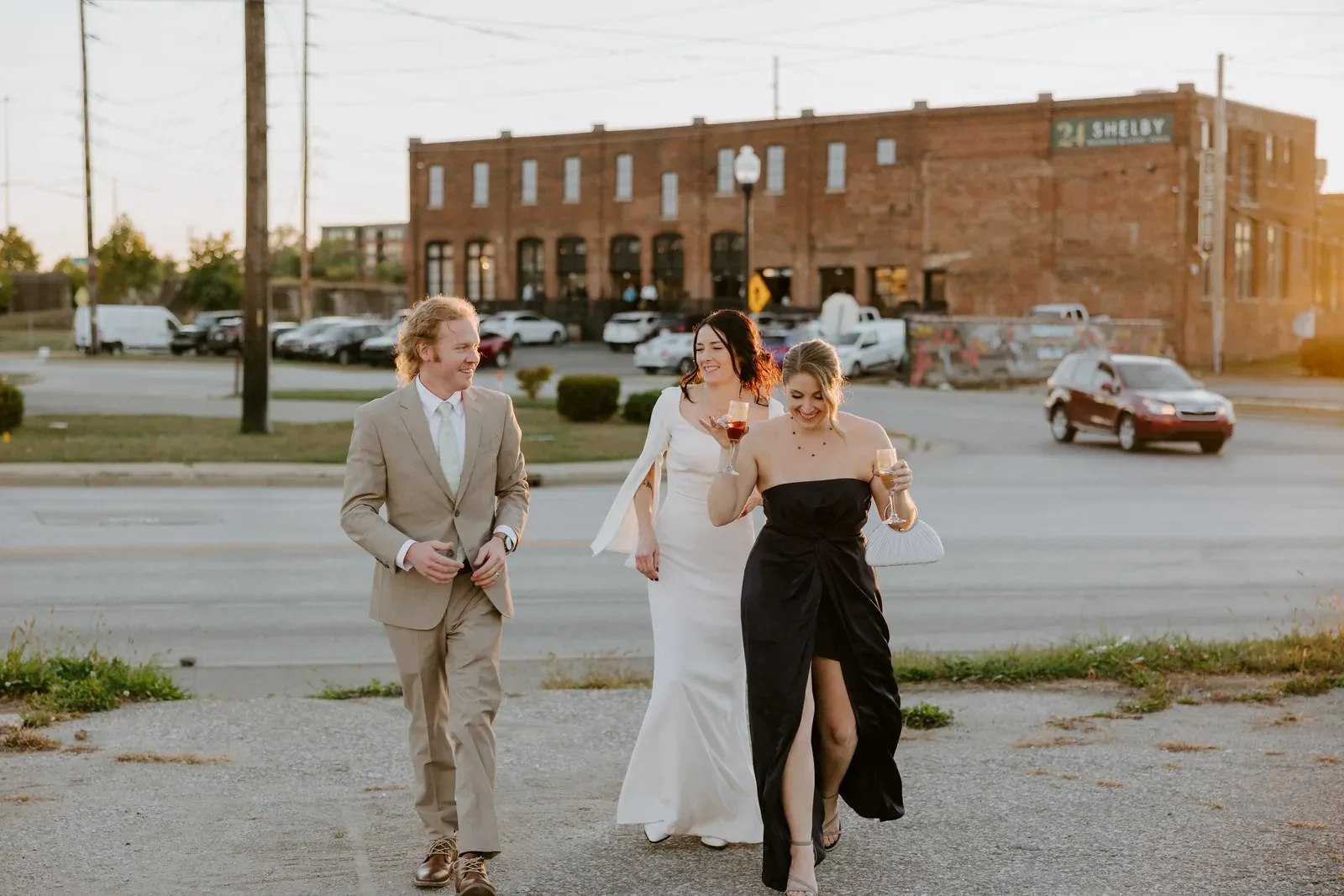 Photo: Clay House Photography
Filter 3: What Are the Venue’s Catering and Bar Rules?
Catering and bar rules are the third filter, and they are the one couples forget. Some venues require their own kitchen, some give you a short preferred list, and some let you bring any licensed caterer. Bar policies split the same way. Find out early, because these rules decide your menu and a big piece of your total.
Ask each venue to put it in one sentence: who is allowed to cook, and who is allowed to pour? Exclusive catering can be easy, because one team does everything. It can also mean you pay their prices for food you didn’t pick. An open vendor policy gives you freedom, but you take on more of the coordination.
At 24 Shelby the answer is short. Any licensed caterer or restaurant is welcome, and they get a food prep kitchen to work from. The bar is the one thing we keep in house. Every wedding uses our bar team, and no outside alcohol is allowed, because Indiana code says so and because it is my bartenders’ licenses on the line. Our list of Indianapolis wedding venues that allow outside catering compares those policies across the city, and the open bar guide explains how bar packages actually work.
Filter 4: Which Season and Day of the Week Can You Live With?
Your date is the fourth filter. Pick a season and a short list of acceptable days before you tour, because the date decides which venues are even open. Saturdays in peak season go first, so flexibility on the day of the week is the single easiest way to widen your options.
Venue booking lead times typically run 12 to 18 months, and peak-season Saturdays at popular venues can go 18 to 24 months out (MMCG Invest, 2025). In Indianapolis, peak season runs May through October. November through April is off-peak, and a Friday or Sunday wedding in any month is easier to book than a Saturday.
Check the city’s calendar too, not just the venue’s. Downtown Indianapolis hosts big conventions, races, and sporting events, and on those weekends hotel rooms get scarce and expensive for your out-of-town guests. Before you fall for a date, look it up against the downtown event calendar. Our wedding weekend guide lists the dates worth avoiding, and it is a lot easier to move a date before the deposit than after it.
My honest opinion: couples are too attached to Saturday. A Sunday wedding on a three-day weekend gives guests a free day to recover, and a Friday night wedding feels like a party, because it is one.
Filter 5: Does the Style Do the Decorating for You?
Style is the fifth filter, not the first. Once a venue fits your count, location, vendors, and date, ask whether you’ll need to transform it. A room with real character needs less decor, and that is money and setup time you get back. A blank room gives you control, but you pay to fill it.
According to Sarah Conrad, Managing Partner at 24 Shelby, “Guests don’t care about 90% of the details people stress over. They care about the energy, the food, and how long the bar line is. Pick a room that already looks like something, and spend your money on the stuff people remember.”
That is the case for a historic building. 24 Shelby was built in 1898 as the bottling house of the Home Brewing Company, and it is the only surviving pre-Prohibition brewery building in Indianapolis. The brick, wood beams, oversized windows, and Edison string lights are already there. If that style is your thing, our guides to historic wedding venues and industrial wedding venues cover the rest of the city.
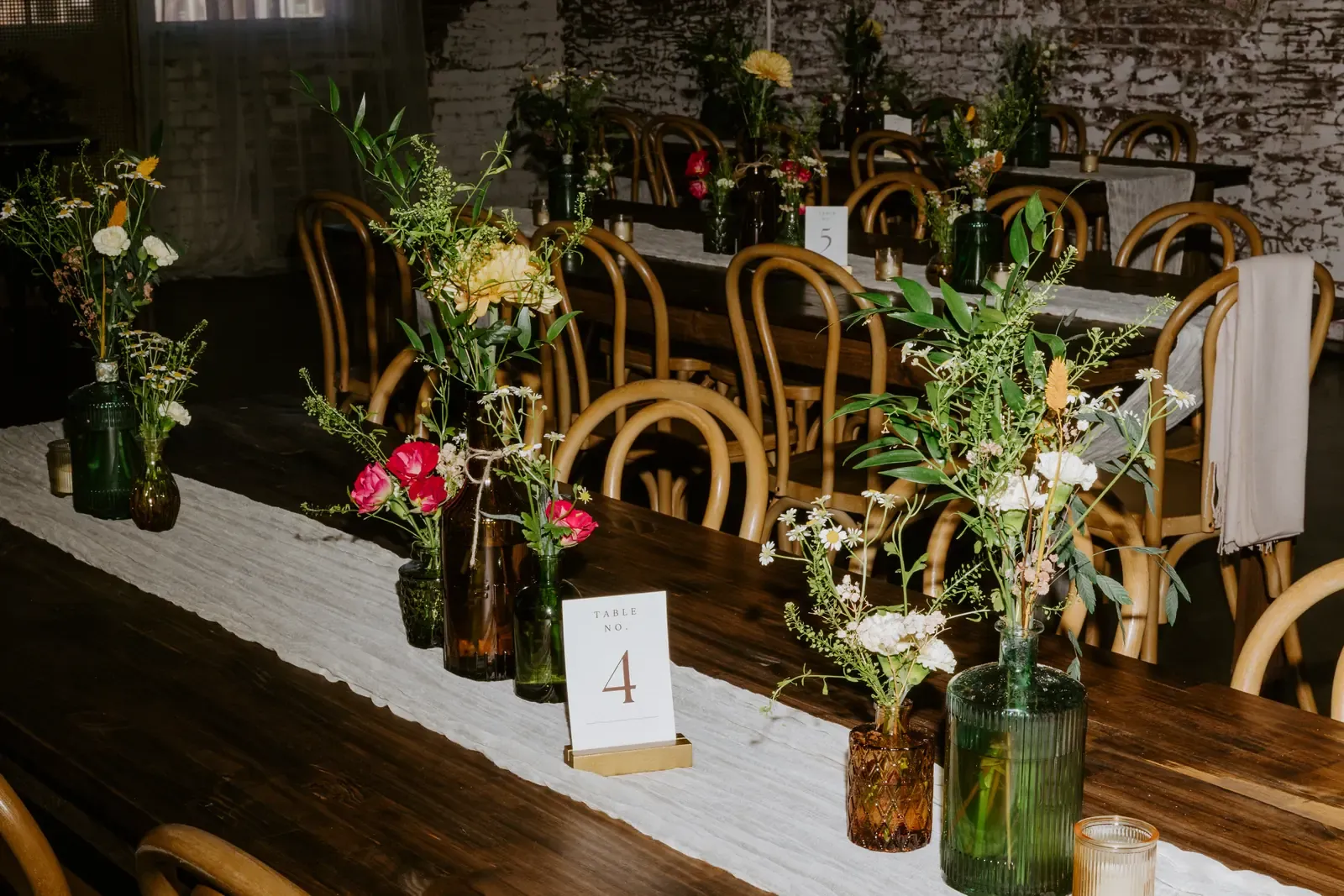 Photo: Clay House Photography
Filter 6: What Does the Wedding Venue Rental Include?
The sixth filter is inclusions: what you get for the rental, and what you still have to rent, hire, or buy. Two venues with similar quotes can land far apart once you add tables, chairs, linens, setup, bar staff, and hours. Ask for the inclusions in writing before you compare prices.
Here is what a full-day wedding rental at 24 Shelby includes, and what it doesn’t:
- Included: 16 consecutive hours of access, normally 8 AM to midnight, so setup, ceremony, reception, and teardown all fit in one day.
- Included: 250 chairs, 30 banquet tables, 30 five-foot rounds, and the antique pieces and soft seating already in the space.
- Included: The Rosewood Room bridal suite from 8 AM, with a four-station beauty bar.
- Included: The initial layout setup, plus the projectors and lighting.
- Not included: Linens for the rounds (banquet tables don’t need them, rounds do), drinks, which are quoted separately through a bar package, and day-of coordination, which is an optional paid add-on.
That last line is the honest part. We are not an all-inclusive venue with a planner built into the price, and if you want one person to handle everything, a fully packaged venue may suit you better. Our breakdown of what’s included in a wedding venue rental covers what to ask everywhere else.
 Photo: Clay House Photography
How Do I Find Wedding Venues in My Budget?
Find venues in your budget by deciding your total first, then working out what share can go to the venue. Venue and rentals take about 29% of the average wedding budget, the largest single slice, with catering close behind (The Knot, 2026). Compare full totals, not rental fees, because the rental fee is rarely the real number.
A few things move the number more than the venue itself:
- The day of the week. Saturdays cost the most nearly everywhere. Ask for Friday, Sunday, and weekday rates side by side.
- The season. In Indianapolis, November through April is off-peak.
- What’s bundled. A venue that includes furniture and a full day of access can come in lower overall than a cheaper room where you rent everything.
- The fees nobody quotes up front. Service charges, overtime, room flips, and vendor requirements add up fast.
Our guide to the hidden costs of wedding venues walks through every one of those fees and how to get them in writing. I’d rather you know them now than find them on your final invoice.
What Should Be on Your Wedding Venue Checklist Before You Tour?
Your pre-tour wedding venue checklist is six yes-or-no answers, one per filter. A venue earns a tour only if it passes all six. This list is for building a short list from your couch. Once you are standing in the room, switch to a full list of tour questions about pricing, timelines, and the contract.
- Seats our guest count at its seated wedding capacity, with room for a dance floor
- Our out-of-town guests can reach it from their hotel, and everyone can park
- Allows the caterer we want, and we understand its bar policy
- Has our date, or one of our backup dates, open
- Looks like our wedding without a big decor budget
- Includes the furniture, hours, and setup we need, in writing
If a venue gets five out of six, it might still be the one. If it gets three, keep scrolling. And when you do book tours, three to five is plenty. Bring our 25 wedding venue tour questions to every one of them so the answers line up afterward.
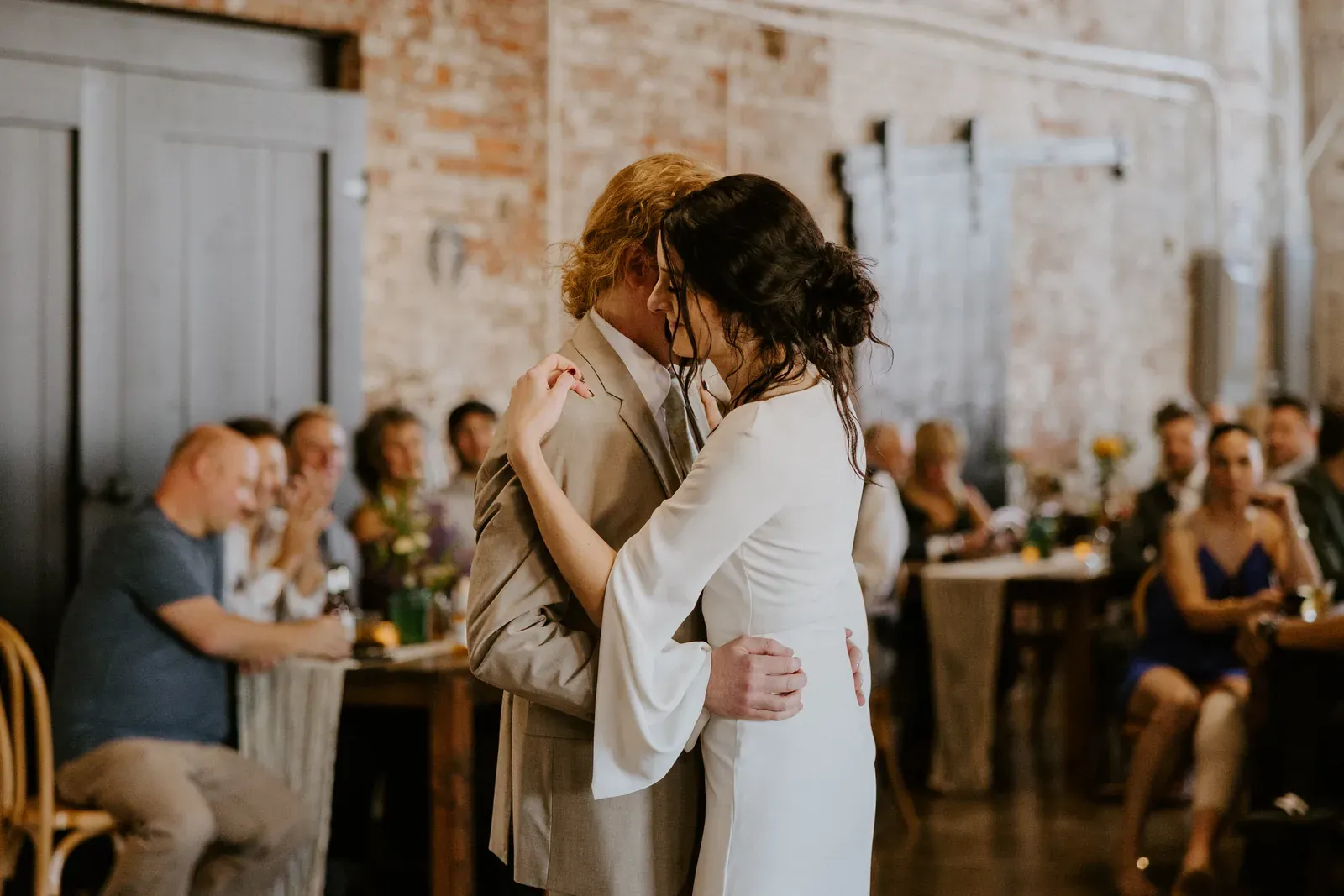 Photo: Clay House Photography
When Is 24 Shelby the Wrong Wedding Venue?
24 Shelby is the wrong venue if you want an outdoor ceremony, more than 200 seated guests, or an all-inclusive package with a planner built in. Every venue has a shape, and ours is a single-floor historic building downtown. Knowing that early saves you a tour.
The Prohibition Patio is lovely for cocktail hour, but it holds about 25 people, and we don’t hold ceremonies out there. If walking down an aisle under trees is the picture in your head, look at a garden venue. If your list is 250 for a seated dinner, you need a bigger room. And if you want one company to plan, cater, decorate, and pour, an all-inclusive venue will feel easier.
What we are good at is the middle of the Indianapolis market: couples planning for up to 200 seated guests who want a ceremony and reception in the same historic room, their own caterer, a bar team that keeps the line moving, and a managing partner who answers her phone. If that sounds like you, take a look at our weddings page or the spaces, and if you just got engaged, our Indianapolis engagement checklist covers what to do in the first few months. When you’re ready, reach out and I’ll walk you through dates.
Frequently Asked Questions
How do I know what wedding venue I want?
Start with your guest count, then decide downtown or suburbs, then check each venue's catering and bar rules. Those three filters remove most of the list. Style comes later, because a room you love that cannot seat your guests or allow your caterer is not really an option. Tour only the three to five venues that pass every filter.
What percentage of your wedding budget should be your venue?
Venue and rentals take about 29% of the average wedding budget, the largest single slice, with catering next at about 24% (The Knot, 2026). Treat that as a planning range, not a rule. A venue that includes furniture, a bar team, and a full day of access can justify a bigger share, because you are not renting those things separately.
How far in advance should you book a wedding venue in Indianapolis?
Most couples book their venue 12 to 18 months ahead, and peak-season Saturdays at popular venues can go 18 to 24 months out (MMCG Invest, 2025). In Indianapolis, peak season runs May through October. If your date is flexible, a Friday, a Sunday, or a November through April date opens up far more options on a shorter timeline.
What is the most important thing when choosing a wedding venue?
Capacity that fits your real guest count. Get a working number first, then compare it to each venue's seated wedding capacity, not its standing or cocktail number. A room that is too small feels cramped and a room that is too big feels empty, and no amount of decor fixes either one.
Is it cheaper to get married on a Friday or Sunday?
Usually, yes. Most venues price Saturdays highest because that is the day everyone wants, and Friday and Sunday dates are easier to get. Weekday and off-season dates are often lower still. Ask every venue on your list for its full rate by day of the week before you rule anything out on price.
How many wedding venues should you tour?
Three to five is plenty if you filtered first. Touring ten venues usually means the list was never narrowed, and couples end up comparing rooms instead of answering the questions that matter. Bring the same list of questions to every tour so the answers are easy to compare side by side afterward.
What should be on a wedding venue checklist?
Before touring, check six things: seated capacity for your guest count, location and parking, catering and bar rules, open dates in your season, a style you will not need to redecorate, and what the rental includes. On the tour itself, switch to a question list about pricing, timelines, vendors, and the contract.
Related Reading
Planning
How to Host a Reception-Only Wedding in Indianapolis
How to host a reception-only wedding in Indianapolis: etiquette, who to invite, invitation wording, how the timeline changes, and where to hold the party.

Planning
Wedding Welcome Party Venues in Indianapolis
What a wedding welcome party is, who to invite, how it differs from a rehearsal dinner, what to serve, and 7 Indianapolis venues for 40 to 80 guests.
Planning
Open Bar or Cash Bar? Wedding Bar Packages Explained
An open bar wedding means the couple covers every drink. How open, limited, consumption, ticket, and cash bars work, plus how to read a venue bar package.